Owning your Onboarding
I'm 60-days into my new role and wanted to share advice on how to own your own onboarding when starting in a new role, including some hot takes on how I'm doing taking my own advice. Onboarding teams have the best intentions but often fail to meet the relevancy needs of learners in the early stages (sorry L&D friends, I know we are working on it!) You can take ownership and set yourself up for success by realizing the only person that can craft a great onboarding plan that works for you is you!
A guide as you navigate your first couple of months in a new role.
I am already two months into my new role (and doing well/loving the team so far), and I wanted to share guidance on how you can own your onboarding experience, with some reflections on how I am doing this myself. Of course, it's unrealistic to achieve 100% of these tips; I'm currently applying ~70% of my advice, and that feels good enough!
Ruthlessly prioritize your learning.
It's easy to deprioritize onboarding in favor of "just getting started and learning as you go." At the senior/executive level, onboarding plans are rarely provided; if they are, they are often just a long list of people to meet and documents to read. I suggest setting a calendar block titled "Onboarding/Learning" for 30min-1 hour a day in your first month, every other day for your second month, and once a week for your third month. If you're provided an onboarding plan, prioritize working on it - for items that don't seem relevant right now, you can deprioritize them or ask someone on your team if it's worthwhile. I try to follow the onboarding plan provided, as someone designed this onboarding plan with my success in mind. If an onboarding plan isn't offered, build one for yourself using the remaining tips.
How am I doing on this while onboarding? I had no director-level onboarding plan for my new role, so I built my own, taking pieces from the sales account managers' onboarding plan and supplementing it with the New Executive SkillUp on Coursera. I've honored my scheduled onboarding time in my calendar ~75% so far and am continuing to add things to my list to learn.
Talk with many customers and customer-facing teammates.
It's imperative to build empathy for customers and relationships with customer-facing teammates. It's tempting to shortcut this process by reading documentation or listening to senior leaders' insights on customers. I suggest talking to ~10 customers or customer-facing people at a minimum. If you want to get it down to a science, here's my formula:
1% of the customer-facing people at the company. So if there are 500 customer-facing people, start talking with 5 people OR
Start with five people. Increase up to 10 depending on business complexity. Multiply by the number of customer personas you have.
The user experience community has excellent advice about defining the correct number of people to generate insights!
Talk to customers worldwide, not just in your region, if you're at a global company. It's typical for teams to get too AMER-focused because, let's face it, talking to customers across time zones can be a challenge. However, if you can work shifted schedules 1-2 days a week during your first 60 days to accommodate more conversations, the empathy gained will pay off in the long run.
How am I doing on this? I've so far spoken with 9 customer-facing people at my job. I've gathered much insight from them, but I need to talk to more people, particularly around the world. So I've been able to scale my observations by watching and listening to 20+ customer conversation recordings between my meetings.
Seek to understand your product/service deeply.
Your ability to understand and articulate the core product/service features, the value proposition, and how the product/service uniquely solves a customer problem is critical in any role. Practice writing, speaking, and answering questions on how your product/service adds value. While meeting with team members, practice explaining the product/service to them in conversation and ask what you're missing.
How am I doing on this? Every Friday, I spend an hour a week learning on Coursera's platform. I'm writing down things I like and don't like about the user experience. I am contemplating the experience of different customers in different contexts. I'm in sales, not product, but I work closely with the product team and believe I can earn trust by not just trying to sell but seeking to understand our product and the vision. I also carry around my Coursera water bottle while out and about, and sometimes people will recognize our brand and want to share their stories about learning on Coursera. I embrace these random encounters with customers!
Seek to understand problems, not to solve problems (quite yet).
There's always much pressure when onboarding to get early wins on the board, make an early impact, and help the team solve some pressing issues immediately. It's essential to take a step back and have the self-awareness that it's doubtful you know how to solve a problem in a new role. I suggest working on the problem only if you understand it. If you can't articulate the problem you're trying to solve, seek to understand it first.
Prioritize 1:1s with colleagues.
Often in an onboarding plan, you'll be provided a curated list of people you should talk to on your first day, week, month, and so on. Often the 1:1 list is unrealistic (mine had a lofty goal to meet 5 VPs in the first week!) Don't worry about executing the onboarding plans timeline for meeting people. Trust your gut if it feels too early/rushed to meet with someone.
Here are sample questions I like to ask:
Tell me about your journey to this point in your career & life.
Where do you live? What does your community mean to you?
What are you curious about me and my role here?
How'd you like us to work together?
I try to walk away with one thing we have in common and one thing unique about the person.
How am I doing on this? I prioritized meeting with my direct reports as soon as possible and spending time with my team first. I pushed the rest of my 1:1s forward 2-3 weeks to have more context and defined questions to ask instead of just a simple meet & greet.
Let people get to know you(r vibe)
One of the hardest things when starting to work with new people is how and when to be yourself amongst them, and I believe this is a personal preference. I suggest being self-aware and checking in with yourself regularly. It personally takes me about a month to relax a little and start to share my authentic self with new people. You can fully protect yourself and ease into sharing your authenticity but know that protecting yourself takes a great deal of energy. I believe the quicker you can get there, the better relationships you'll have on your team. Again, easier said than done, and many factors can impair this, like a lack of inclusion or belonging. My advice is: to be reflective and kind to yourself, and it will come with time and relationships made.
First deliverable suggestion: write your observations & insights.
If your manager does not provide a 30-60-90 day success plan with clear deliverables, I suggest you build one and seek alignment with your manager. If you need a place to start, I recommend creating an observations and insights paper or presentation based on the observations you've made so far in the role and focus in on the customer experience. You get to use your fresh set of eyes and observational skills to provide some outside perspective on areas of opportunity for your business. The customer interviews mentioned above could be a strong input into this deliverable.
For my L&D friends: avoid learning and reviewing simultaneously.
When going through onboarding training/plan, it's common to start to review them through our L&D lens, finding ways to improve them, especially if you or your new team owns onboarding. I suggest you don't need to quality check now. Instead, go through the experience entirely, and focus on improvements later. Your job right now is to learn and grow yourself, not to start already finding problems with onboarding. If you're tasked with doing both simultaneously, split your time: be intentional about when you're learning and evaluating the learning.
Lessons Learned from Amazon
After 3.5 years, it's bittersweet to share that I've said goodbye to Amazon. While I am excited about my next adventure, I will miss my fellow Amazonians and Amazon’s Leadership Principles. During my time at Amazon, I had a large-scale impact on L&D/sales enablement across the business - from modernizing the learning journey of 20k+ customer service reps to launching prospecting days for 30k+ AWS sellers to have effective customer conversations about the cloud. Along the way, I got to work with the smartest, most talented people in the world that had an immense impact on my career. Thank you to my colleagues and mentors for showing me the way, supporting and challenging me, helping me to grow, and preparing me to take this next leap. I'm sharing my Top 5 Lessons Learned from Amazon that will live in my heart 💚 forever. I’m so excited to leverage these learnings on my next adventure. More to come on what’s next!
Here are my Top 5 Lessons Learned From Amazon that will live in my heart 💚 forever.
1/ To succeed, you’re going to fail.
💚 Before Amazon, I was a bit of a perfectionist, and failure felt personal. Early in my career at Amazon, I had to publicly explain a failure in an MBR to senior leaders. In the MBR, I was asked not just to explain the failure but what I would do moving forward to mitigate the impact and what I learned from it. Repeatedly, I learned that sharing failures is as important as sharing wins because your team is far more likely to succeed from it.
2/ Ask often, “What’s the (customer) problem we are trying to solve?”
💚 When on a project or in a difficult meeting where you can’t seem to align with teammates, my favorite hack is to ask this question to re-ground the conversation around your customer. Cross-functional teams with different objectives, skills, and ways of working often have one thing in common, and that’s a shared customer. Added bonus: this question is a great one to pose if you want to build confidence in speaking up in meetings.
3/ Measure, measure, measure (and measure some more).
💚 Before Amazon, my time in L&D was a lot of launching learning products with no measurement plan in place. I’m proud to say measurement is now one of my top strengths. Measuring impact and piloting/experimenting with success criteria allows businesses to realize the value of your work. Another tried and true question: “so how will we measure that?” ensures you are getting the data you need to make effective decisions in the future.
4/ With great impact comes great responsibility.
💚 Amazon was my first go in big-tech. Prior, I had worked at smaller, mission-driven organizations. This transition was tough, and I was scared I would get jaded. Surprisingly, I had opportunities to give back in ways I hadn’t before. At Amazon, I volunteered hours in the community more than ever before and spent ~100 hours a year mentoring and coaching other Amazonians. I’m thankful that Amazon supported and encouraged me to stay mission-driven.
5/ Always, Learn and Be Curious
💚 I attribute each success I had at Amazon to ruthlessly prioritizing my personal development. Amazon is a challenging and demanding place to work; it’s easy to deprioritize your curiosity over demanding deadlines or to stop exploring possibilities because you’re comfortable. Over the last ~3.5 years, I learned several new skills, earned four professional certifications, and retained by no-meeting/”Learning Friday” rule the entire time.
Let's talk political unrest at work
How might we talk about political unrest at work? Create space for active, inclusive reflection and don't ignore it.
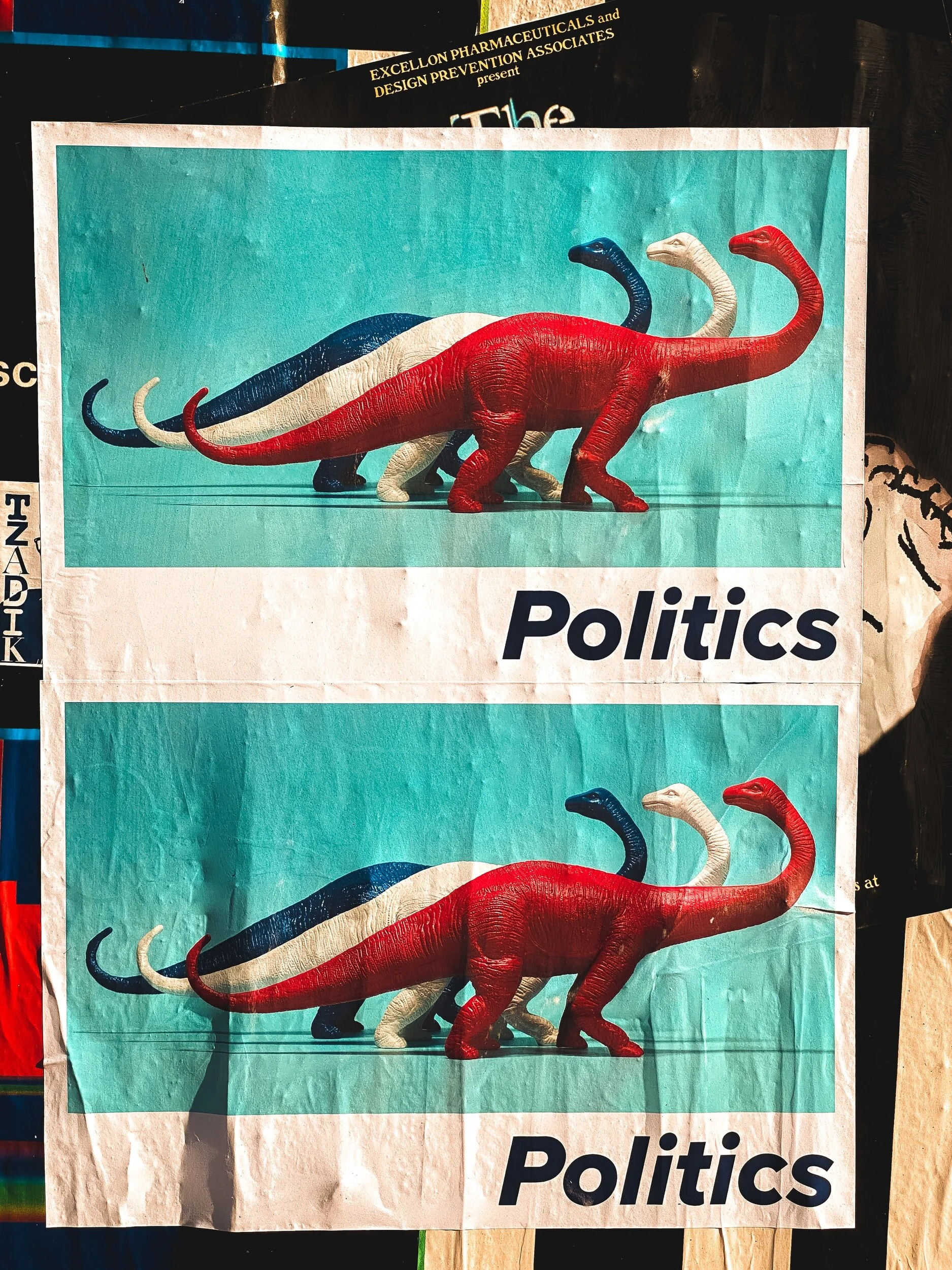
So, let’s talk about the elephant in the room. Or donkey, depending on your political leanings.
Last week was rough. I don’t know about you, but when the news started to break about the Capitol riot, work was done for the day. In a perpetual doomscrolling on my phone, I was simultaneously shocked and jaded as our Capitol was being breached. Coming back to work the next day and into this week has been difficult. I wasn’t sure if and how to bring up the recent events with my team. I found myself asking, how might we talk about political unrest at work?”
Step 1. Create space for active, inclusive reflection.
Step 2. Please don't ignore it.
Here are some tips:
❌ Instead of sending out a highly scripted and heavily reviewed email of your thoughts.
✅ Try sending out an unscripted recording of yourself answering questions from the team.
❌ Instead of opening meetings with blanket statements like "last week was crazy, huh?" only to jump right into the agenda.
✅ Try adding current events/political unrest as a topic in your team meetings. Socialize the agenda ahead of time, so your team knows what to expect. Rather than preparing a speech, prepare a set of questions to facilitate.
For example: "What's one word to describe how you are feeling after the riots at the Capitol? Feel free to say one word, and expand on the word if you'd like." Allow each person to share their word without responding.
Not a people manager? Influence without authority by:
✅ Request this as a topic in your team meeting agendas
✅ Share that these conversations are important with your manager.
Feel free to share your stories and examples around productive conversations about political unrest at work!
A bit about me
It all started when…
IT ALL STARTED WHEN…
I was a scientist faced with a realization: what I loved most about science was learning it and thinking it, not doing it. My fondest memories in grad school weren’t in the lab, running endless western blots, or watching stem cells mature like they were my own children. I loved pondering the universe's laws and evoking a learner’s curiosity. I savored all of the “aha” moments, the persistence, and the growth of all different kinds of learners.
I left my pipette (tip-down) to pursue any job that provides two things: I would be able to learn interesting things, and that I would be able to help others learn interesting things.
I moved to San Francisco and was swiftly humbled by educators’ lack of interest in my masters in science and the cost of living. I volunteered as an afterschool STEM tutor at a local middle school in the Fillmore while fervently applying to new grad programs in education. I thought a new diploma might solve my problem of not being taken seriously. I got into several reputable Ph.D. programs in Educational Psych and turned them down. It didn’t feel right; I wanted to impact now, not in 8 more years.
I went back to the middle school I was volunteering at and asked if I could run their afterschool program. I knew it needed attention. Kids were opting for unsafe activities after-school, rather than (to no surprise) going to what one could consider glorified babysitting in the classroom. The school agreed to my proposal, so long as I paid myself as I found funding. I had no idea what I was doing. I scrambled around the city to find NPOs to invest in, curriculum programs that would run for free, and volunteers. Long story short, I made it work due to a Buchanan YMCA job opportunity that would pay me just a little and helped fund the program for the school year.
The afterschool program was a large success, with many failures along the way. I gained perspective on the bay area & inner-city culture; I learned how to write grants, teach informally, design curriculum, and generate local partnerships. At the end of the school year, I handed over the program to a passionate educator in a much better place than it was at the beginning of the year, and it felt right. I knew I would miss working with kids, but for now, I was on my way to new adventures in the big world of tech.
I landed upon an almost-too-good-to-be-true opportunity at an educational technology start-up company, Smart Sparrow. They were applying for a next-generation courseware grant with the Bill and Melinda Gates Foundation. My interview was just a quintessential start-up: in a co-working space in SOMA, amongst some kegs, very informal and likely undocumented. I introduced myself to what would be my future team stuffed in what appeared to be a closet; with one small head jerk, I was able to look everyone in the eye. It turned out I was perfect for the job: they wanted to design an intro-biology course for non-science majors. Zoom forward a bit, and this happened:
Not only did we win, but we won big. You never see this kind of money in education, now pouring into a small company just learning to crawl. It was exhilarating and terrifying. I learned fast about everything technology, products, learning design, graphics, customer service, pedagogy…the list goes on. I spent many nights napping on my office couch or on my coworker’s couch who lived next door to our office. I worked on this grant for over 3 years while also servicing 37 (yes, I counted) additional clients: NPOs, community colleges, multi-college grants, and even the corporate big-leagues. At one point, I designed an experience, I kid you not, for helping millionaires deal with their millions of gold bars. It was truly bizarre, but the most rewarding part was all of the life-long friends I made. The brazen culture of start-ups creates a family bond that feels everlasting.
After a few years, I knew I had some large blind spots and was yearning for a change, both in the scenery and workplace culture. I had my eyes set on a move to Seattle, Washington. I knew that to keep growing; I had to find a new challenge. I wanted to learn how to run a successful business while growing my leadership skills. I had yet to be really be exposed to the world of operating budgets, business data, and having to measure the impact of my work. A Google search of: where can I learn about leadership and how to run an impactful business in Seattle? will lead you to one place: Amazon.
I am a Manager of Learning Experience Design and Program Management at Amazon. Typical corporate life with an unnecessarily long title. In all seriousness, I am really enjoying life at Amazon. I have grown exponentially as a leader and am challenged every day.
I continue to learn and help others learn, which is my happy place. Thanks for reading.